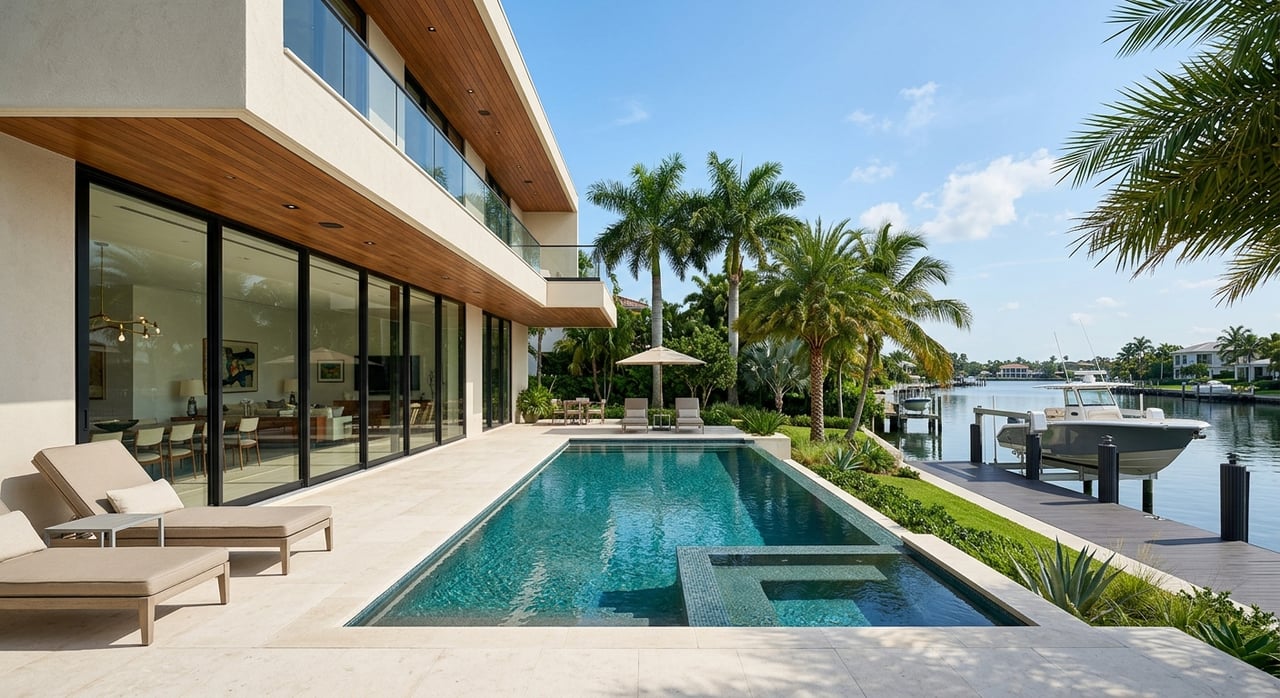
Buying a waterfront estate in Port Royal can feel straightforward until you look past the views. In this part of Naples, value is shaped by much more than the house itself. You also need to understand dock rules, shoreline conditions, flood review, and the approval path for future changes. If you want to buy with confidence, it helps to know what to evaluate before you fall in love with the finishes. Let’s dive in.
Why Port Royal evaluation is different
Port Royal waterfront properties are governed by multiple layers of rules. The Port Royal Property Owners’ Association deed restrictions work alongside City of Naples ordinances, and when standards conflict, the more restrictive rule applies.
That matters because written approval is required before new construction, exterior changes, or certain submerged-area improvements move forward. In simple terms, a property’s value is tied not just to what exists today, but also to what can be approved tomorrow.
For buyers, that changes the due diligence process. A beautiful estate may still present challenges if the dock configuration, shoreline work, or renovation plans do not align with Port Royal and City of Naples requirements.
Start with the regulatory framework
Association approval affects long-term value
Port Royal’s deed restrictions are detailed and highly specific. They require prior written approval for buildings, exterior alterations, and submerged-area improvements, and approved plans must come from an architect approved in writing by Port Royal.
The Association can also disapprove plans on aesthetic grounds. That means design consistency is part of the neighborhood’s value, and homes that already fit Port Royal’s standards may be easier to maintain, improve, and resell.
The restrictions also include design requirements such as a minimum roof pitch of 8:12 and no metal roofs. If you are thinking about renovations, those details should be part of your evaluation from the beginning.
City rules still shape waterfront use
City of Naples zoning also plays a direct role. In the R1-15A district, piers are permitted accessory structures at developed waterfront residential properties.
The city also recognizes that some Port Royal piers may need additional length to reach usable depth in Naples Bay and Gordon Pass. Even so, longer projections can trigger additional setback requirements, so dock usability is as much a legal question as a physical one.
Flood and coastal review can impact plans
Naples states that almost all permitted development requires floodplain review. Properties in Special Flood Hazard Areas, including Zones A and V, may face added review for renovations and rebuilding.
The city also requires a Coastal Construction Setback Permit for certain work seaward of the Coastal Construction Control Line, including new construction, excavation, fill, and shoreline protection work. On top of that, Collier County notes that most homeowner policies do not cover flood, and flood insurance is generally required for federally backed mortgages in A and V zones.
Evaluate the lot before the house
Know the frontage type
One of the first questions to answer is what kind of water frontage the lot actually has. A property may front Naples Bay, Gordon Pass, a canal, or a more protected cove, and that distinction can affect privacy, wake exposure, and dock feasibility.
It can also affect what is allowed. Port Royal’s restrictions permit mooring pilings only on properties facing Naples Bay, Gordon Pass Channel, and certain named coves, so frontage type is not just a lifestyle feature. It is part of the asset itself.
Study orientation and view lines
Orientation matters on a luxury waterfront lot. Light, breezes, privacy, and how the home relates to neighboring docks or upper-level windows all shape daily living.
In Port Royal, this issue goes beyond preference. The Association’s guidelines require plans to identify neighboring homes and show a waterfront view line, which signals that preserved sightlines are an important part of value and design review.
Check the shoreline carefully
The shoreline deserves as much attention as the house. During a tour, pay close attention to the seawall or rip rap, top-of-bank condition, visible erosion, and whether the shoreline appears to have been raised.
Port Royal’s riprap procedures state that renourishment should restore the original top-of-bank elevation rather than raise it. The Association also requires detailed surveys and an as-built survey after completion, so missing surveys or vague repair records should be treated as a serious concern.
Evaluate dock utility, not just appearance
Make sure the dock fits your boat
A dock can look impressive in listing photos and still fall short in practice. The better question is whether the dock is legally and physically suitable for your vessel.
You should verify dock length, side-yard setbacks, vessel mooring allowances, and low-tide depth. In Naples Bay and Gordon Pass, the city has recognized that some piers may need to extend farther than 10 feet to reach 5 feet mean low water, but that does not mean every extension will be allowed.
Review existing dock compliance
Port Royal restricts docks to uncovered structures that do not extend more than 10 feet beyond the platted waterfront lot line. The rules around mooring pilings are also location-specific.
That means a buyer should not assume the current dock, lift, or mooring setup is fully compliant just because it exists. It is smart to compare the current condition against the survey, permit history, and association and city standards.
Look past luxury finishes
Check the building envelope
A waterfront estate may feel generous, but the actual buildable and usable area can be tighter than it looks. Port Royal’s guidelines include a 40-foot front-yard setback, a typical 12.5-foot side setback, and a waterfront rear setback that must follow the most restrictive applicable rule.
That waterfront rear setback may be controlled by the city’s 30-foot mean high water line rule, the platted waterfront line, or the waterfront view line. In real terms, these limits can affect where a pool, patio, mechanical equipment, or future addition can go.
Renovation potential needs a reality check
In Port Royal, the best estate is often the one that already fits the rules. The Association requires approved architects and builders, signed and sealed plan sets, and final permit submission through the City of Naples system after Association approval.
The guidelines also call for compatibility with adjacent homes and the community as a whole. If a property would require multiple exceptions or major redesign to match your goals, your timeline and costs may look very different from what you first imagined.
Flood and drainage rules can limit changes
Renovation plans should also be tested against flood and drainage rules early. Port Royal states that substantial changes in land elevation are not permitted except as needed for flood compliance, and runoff must be directed away from neighboring properties.
Naples also notes that substantial improvements or substantial damage can trigger compliance with flood regulations, including elevation requirements. If you are evaluating a major renovation, it is wise to understand these limits before making an offer.
Documentation is part of the property value
Strong records signal stronger stewardship
On luxury waterfront homes, some of the most expensive issues are hidden from view. Drainage work, dock modifications, shoreline repair, and exterior changes all carry more risk when the documentation is incomplete.
Port Royal’s procedures repeatedly require approved plans, signed certifications, and as-built surveys. That is a strong indication that paperwork quality is not just administrative. It is part of how you evaluate workmanship, compliance, and future resale confidence.
Ask for the right records
When you tour a Port Royal waterfront estate, request documentation early. Key records to review include:
- Dock permits
- Seawall or rip rap permits
- Pool and addition permits
- As-built surveys
- Flood zone information and base flood elevation details
- Records of Association approvals
- Any open permits or unresolved approval issues
If those records are incomplete or hard to produce, slow down and investigate further. In a market like Port Royal, precision matters.
A practical Port Royal checklist
Before moving forward on a waterfront estate, focus on these essentials:
- Confirm whether the property fronts Naples Bay, Gordon Pass, a canal, or a cove
- Verify that the dock, lift, or mooring setup matches the survey and applicable rules
- Review shoreline condition, erosion signs, and any available rip rap or seawall history
- Confirm the FEMA flood zone and review insurance implications early
- Understand the Association approval path for any exterior changes or new construction
- Check for open permits, unresolved approvals, or nonconforming shoreline work
- Evaluate whether the existing building footprint leaves room for the lifestyle features you want
Why expert guidance matters here
In Port Royal, a waterfront purchase is part lifestyle decision and part technical review. The right property should offer not only beauty and boating access, but also a clear path for ownership, maintenance, and future improvements.
That is where a disciplined eye matters. When you understand design fit, construction quality, regulatory constraints, and documentation standards together, you are in a much stronger position to judge true value.
If you are considering a waterfront estate in Port Royal, working with an advisor who understands both craftsmanship and process can help you move with more clarity. To talk through your goals and next steps, connect with Shannon Spalding.
FAQs
What should you review before buying a Port Royal waterfront estate?
- You should review the water frontage type, dock and shoreline permits, surveys, flood zone details, Association approval history, and any open permits or unresolved compliance issues.
Can you renovate a waterfront home in Port Royal without approval?
- No. Port Royal requires written approval for new construction and exterior alterations, and the City of Naples may also require floodplain or coastal permitting depending on the work.
How do dock rules affect Port Royal property value?
- Dock rules affect whether the existing setup is legally usable for your vessel, whether changes may be approved, and how much practical boating access the property really offers.
Why does shoreline condition matter for a Port Royal estate?
- Shoreline condition matters because erosion, undocumented repairs, missing surveys, or nonconforming renourishment can affect cost, compliance, and long-term value.
Does flood zone status matter when buying in Port Royal?
- Yes. Properties in Special Flood Hazard Areas may face added review for improvements or rebuilding, and flood insurance may be required for federally backed mortgages in A and V zones.